How to Evaluate an AI Product Finder for Your Online Store: A 10-Point Technical & Commercial Checklist
Discover how to evaluate AI product recommendation software and interactive product finders. Compare algorithmic precision, platform latency, integration costs, and conversion ROI.
Technology writer, e-commerce strategist, and enterprise software reviewer at AfricaDeep.
Published: 22 September 2026
Updated: 10 October 2026
How to Evaluate an AI Product Finder for Your Online Store: A 10-Point Technical & Commercial Checklist
Affiliate Disclosure: This publication contains legitimate affiliate links to partner software solutions. When you evaluate or subscribe to products through links featured in this guide—including our highlighted solution [GuidelyPro.AI](https://guidelypro.pxf.io/OYJmQz)—AfricaDeep.com may earn an affiliate commission at no extra charge to you. Our engineering assessments and benchmark reviews remain completely independent and objective.
---
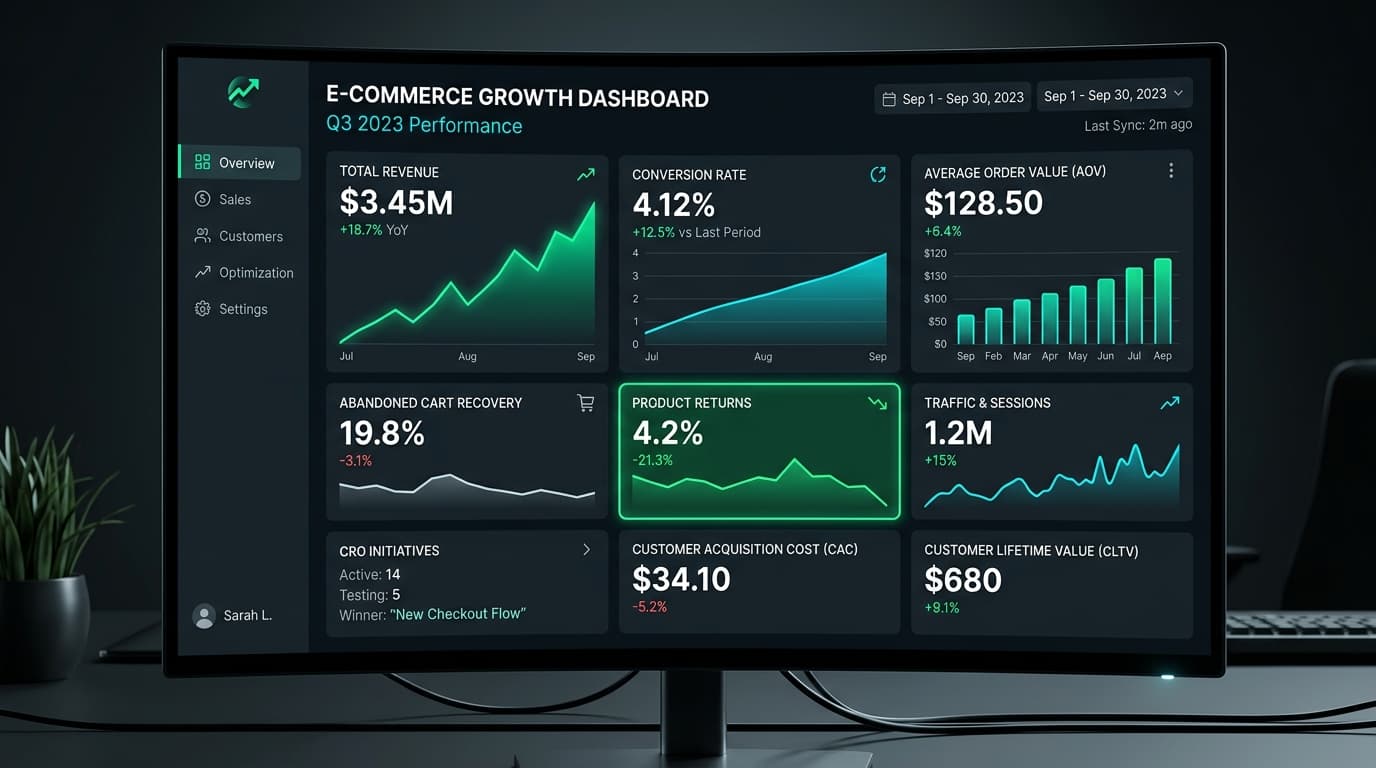
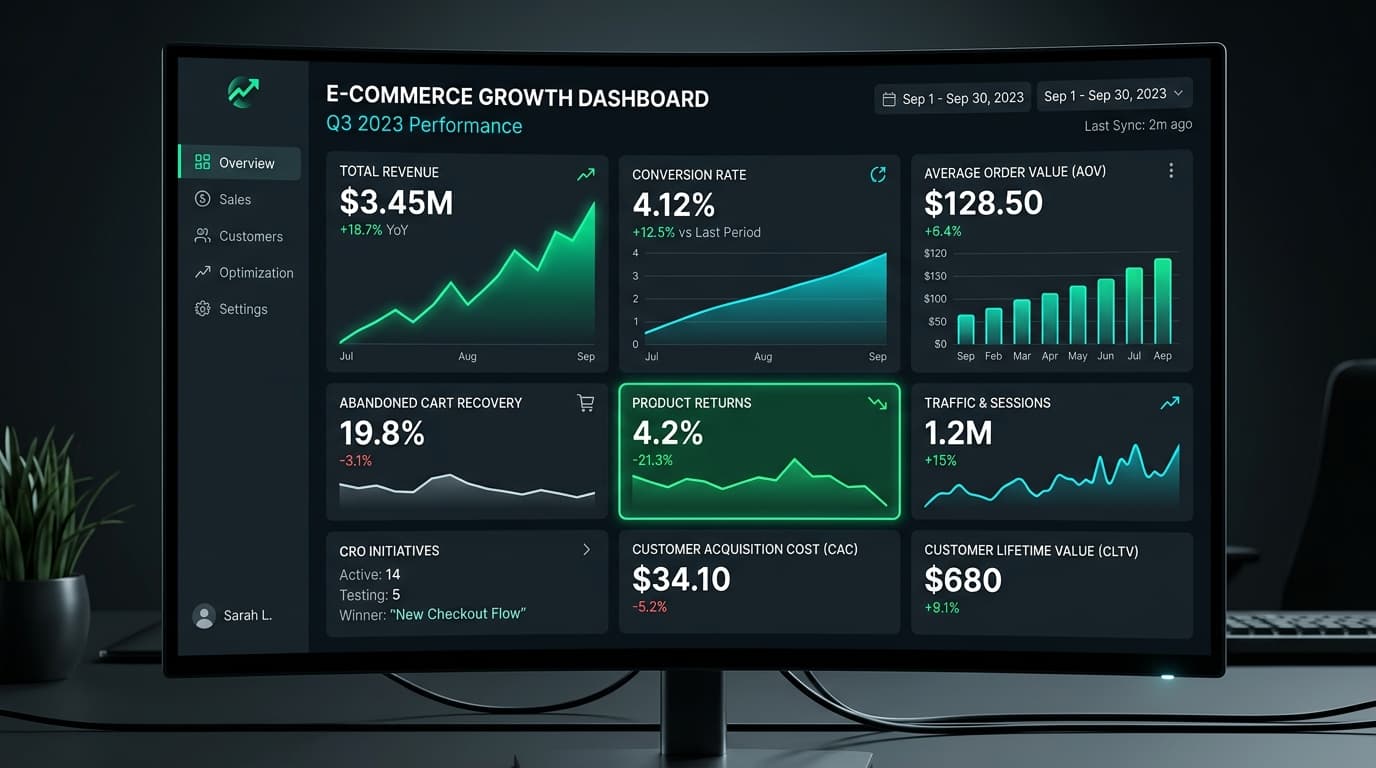
Selecting an artificial intelligence software engine to guide high-intent shoppers through your digital product catalog is among the most consequential technology decisions an e-commerce executive, growth marketer, or merchandising director can make. A well-designed product finder can elevate conversion rates by 200% to 400%, lift average order values (AOV) by over 25%, and slash return rates by guaranteeing customer compatibility before checkout. Conversely, a clunky, slow, or poorly calibrated engine frustrates customers, bloats page weight, damages mobile speed, and drains engineering hours without delivering commercial impact.
With dozens of e-commerce SaaS platforms branding themselves as "AI discovery engines" in 2026, distinguishing genuinely intelligent, high-velocity tools from glorified static quizzes can be challenging.
In this comprehensive evaluation guide, we break down a rigorous 10-point technical, commercial, and operational scorecard. Whether you manage a boutique direct-to-consumer storefront on Shopify, an enterprise WooCommerce catalog, or a headless composable architecture, this framework ensures you invest in software that delivers demonstrable return on investment (ROI).
---
The Strategic Importance of AI Guided Selling in Modern E-Commerce
Traditional e-commerce browsing was architected around hierarchical category menus, faceted sidebar filters, and predictive keyword search bars. While these navigational mechanisms function reasonably well when a shopper arrives knowing the exact SKU or product model they desire, they fail catastrophically when a shopper approaches with a problem, an aspiration, or limited technical vocabulary.
Consider these common shopping inquiries that occur every day across digital storefronts: - "I have dry, sensitive skin that reacts poorly to retinol; what night cream and serum routine will hydrate without triggering irritation?" - "We are camping in the high Rockies during October with two small children; what 4-person tent offers wind resistance and thermal insulation under $350?" - "I produce voiceover narration in an untreated suburban apartment bedroom; what USB microphone setup minimizes background ambient noise under $200?"
Faced with traditional facet filters (such as Brand, Color, Weight, Price Bracket), customer cognitive load spikes. Shoppers are forced to translate their personal human circumstances into technical hardware specifications—a frustrating exercise that triggers decision paralysis and shopping cart abandonment.
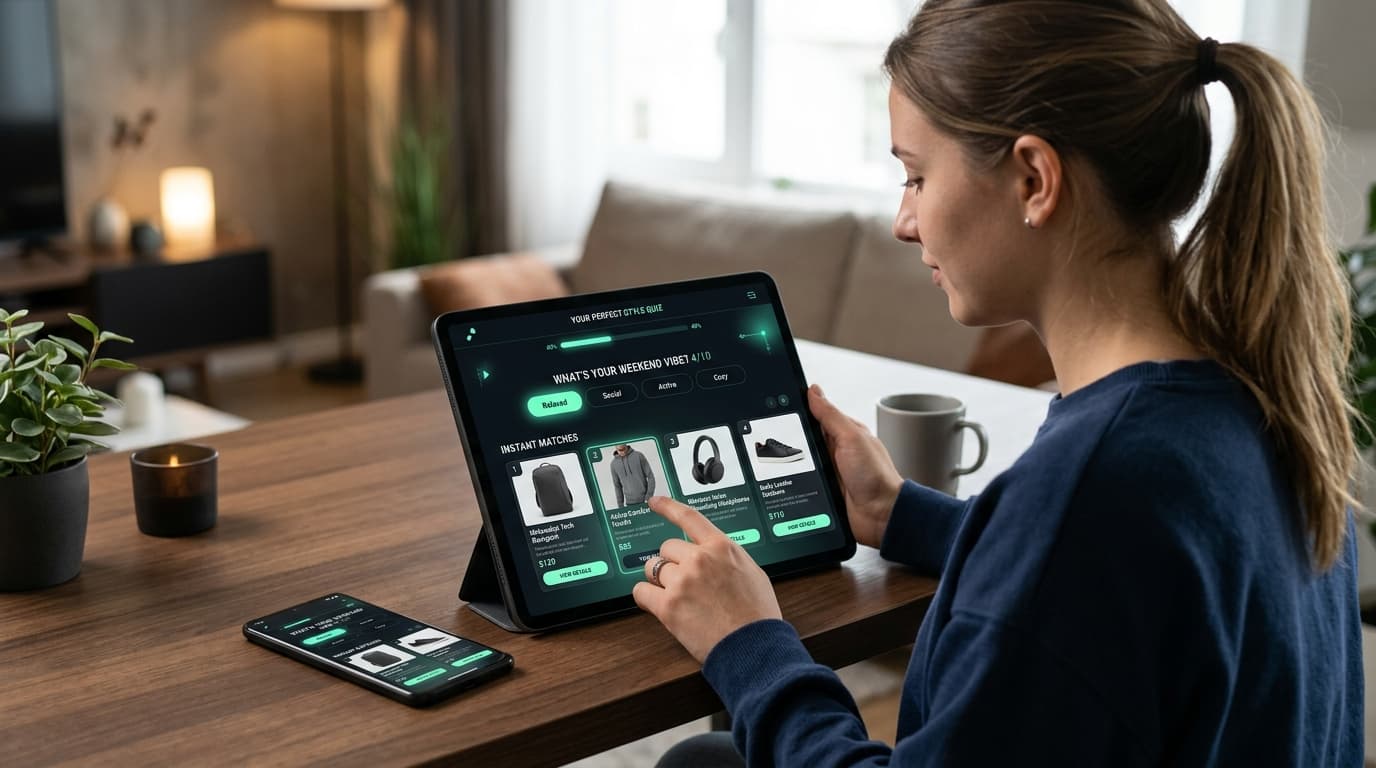
Interactive product finders powered by intelligent guided selling invert this paradigm. Instead of asking customers to navigate thousands of product specifications, the tool conducts a brief, consultative discovery dialogue, translating user needs into calibrated product pairings. Modern engines like GuidelyPro.AI represent the state of the art in zero-latency guided discovery.
---
The 10-Point Evaluation Scorecard
To evaluate potential AI product finder solutions systematically, score each prospective vendor against the following 10 pillars across Technical Performance, Merchandising Intelligence, and Commercial Viability.
| Criterion | Evaluation Focus | Benchmark Threshold | | :--- | :--- | :--- | | 1. Algorithmic Flexibility | Rule logic + machine learning dynamic weighting | Multi-attribute ranking with fallback logic | | 2. Client-Side Latency | CDN delivery, script bundle weight, DOM paint speed | Total script < 50 KB, initial question render < 100ms | | 3. Inventory Real-Time Sync | Webhook architecture, out-of-stock exclusion | Instant stock sync via native webhooks (< 5 seconds) | | 4. Mobile & Touch Ergonomics | Thumb-zone reachability, swipe fluidity, responsive layout | 100% responsive, zero viewport zooming or clipping | | 5. Visual & Brand Customization | CSS injection, font inheritance, white-label design | Complete brand alignment without vendor watermarks | | 6. Omnichannel Embedding | In-page embeds, popover modal triggers, dedicated URLs | Embeddable anywhere via standard HTML/JS snippet | | 7. Zero-Party Data Capture | Lead generation forms, CRM syncing, survey analytics | Email/SMS capture before or after recommendations | | 8. Multi-Item Bundle Logic | Cross-selling logic, accessory matching, tiered upsells | Bundle discounts and complete solution kits | | 9. Native Platform Integration | Pre-built apps for Shopify, WooCommerce, BigCommerce | No custom middleware or complex API coding required | | 10. Transparent Pricing & ROI | Flat-rate tiers vs predatory gross-revenue tax | Predictable pricing with no gross merchandise value fees |
---
1. Algorithmic Flexibility: Rules vs. Machine Learning
The first question when evaluating an AI recommendation engine is how recommendations are generated. Purely hardcoded decision trees are too fragile for complex inventories, while pure "black-box" neural networks frequently produce nonsensical recommendations because they lack explicit merchandising constraints.
The ideal product discovery platform incorporates hybrid algorithmic intelligence: - Deterministic Hard Constraints: Non-negotiable boundaries, such as excluding items outside the customer's stated budget, filtering out out-of-stock variants, or strictly enforcing chemical allergen exclusions in cosmetics. - Probabilistic Soft Weighting: Multi-factor scoring that weighs customer preferences (e.g., brand affinity, aesthetic taste, experience level) to rank suitable options.
When testing vendors, check whether their administrative interface allows merchandising teams to boost specific products, highlight seasonal promotions, or prioritize high-margin inventory while preserving algorithmic relevance. Solutions like GuidelyPro.AI achieve this balance by pairing intuitive visual flow builders with intelligent product matching algorithms.
---
2. Client-Side Latency and Web Performance (Core Web Vitals)
Every 100-millisecond delay in mobile page rendering costs an e-commerce merchant roughly 1% in conversion rate. An interactive product finder script that adds 500 KB of bloated JavaScript libraries will degrade your Google Lighthouse score, hurt organic SEO rankings, and frustrate mobile shoppers.
When evaluating vendor scripts, run them through Google PageSpeed Insights and WebPageTest:
- Total Asset Weight: The production JavaScript payload must not exceed 60 KB compressed (gzipped).
- Asynchronous Execution: Scripts must load asynchronously or deferred (async or defer) so they never block DOM parsing or initial content rendering.
- CDN Edge Distribution: Assets should be served from globally distributed content delivery networks (Cloudflare, AWS CloudFront, or Fastly) to minimize time-to-first-byte (TTFB) across North America, Europe, Asia, and Africa.
Modern tools like GuidelyPro.AI are engineered with modern lightweight vanilla JavaScript that executes in under 45 KB, preserving blistering page speeds.
---
3. Real-Time Inventory and Variant Synchronization
There are few customer experiences more damaging to brand trust than guiding an eager customer through a 5-question consultative quiz, recommending the ideal product, only for them to discover that their required size or shade is out of stock upon clicking "Add to Cart."
Your evaluation must verify how the engine handles catalog synchronization: 1. Webhook-Driven Inventory Updates: When an item sells out in Shopify or WooCommerce, does the product finder update its availability within seconds, or does it rely on an hourly cron job? 2. Variant-Level Filtering: Can the discovery tool check specific SKU variants (e.g., Size Large in Sage Green) rather than merely top-level product availability? 3. Automated Fallback Recommendations: When a top-tier recommendation is temporarily unavailable, does the engine gracefully recommend the next best alternative without breaking the customer journey?
---
4. Mobile Ergonomics and Touch-First UX
Between 65% and 80% of consumer e-commerce traffic is generated on mobile devices. A product finder designed primarily for desktop wide screens with complex hover states and tiny radio buttons will fail on touchscreens.
Evaluate the following mobile design factors: - Thumb-Zone Navigation: Are primary buttons, choice cards, and "Next Step" triggers positioned within easy reach of one-handed smartphone users? - Touch-Friendly Cards: Visual image choices should feature large target boundaries (at least 48x48 pixels) to prevent accidental mis-taps. - Zero Viewport Zooming: Inputs and interactive elements must not trigger automatic viewport zoom bugs in mobile Safari iOS or Chrome Android. - Swipe Transitions: Card carousels and multi-step progressions should support natural horizontal swipe gestures.
---
5. Visual White-Labeling and Brand Harmony
Your interactive product finder should feel like a bespoke native feature of your digital flagship store, not a third-party widget awkwardly grafted onto your theme.
Examine the styling controls provided by prospective platforms: - Font Inheritance: Can the widget automatically inherit your theme's Google Fonts or custom web fonts? - Custom CSS Support: Does the platform provide direct CSS override fields for pixel-perfect adjustments? - Brand Color Palette: Can you configure primary action buttons, hover states, card backgrounds, and progress bars to match your hex code standards? - White-Labeling: Can you completely remove vendor badges ("Powered by XYZ") without paying exorbitant enterprise upsell fees?
Engineers and store owners frequently praise GuidelyPro.AI for its clean, modern aesthetic that effortlessly blends into contemporary Shopify Dawn, Prestige, and custom headless themes.
---
6. Omnichannel Embedding Flexibility
A high-performing product finder should not be locked to a single isolated page. To capture diverse customer segments across their shopping lifecycle, evaluate whether the software supports multiple embedding formats:
Embedded In-Page Container: Rendered directly within a dedicated landing page (e.g., store.com/pages/find-your-match).
2. Sticky Drawer or Slide-Out: Accessible via a floating launcher button on collection pages and category catalogs.
3. Product Detail Page (PDP) Cross-Sell Widget: Embedded on complex product pages to help shoppers confirm fit, sizing, or accessory compatibility.
4. Standalone Fullscreen URL: A clean, distraction-free landing page ideal for direct linking in paid TikTok, Meta, and Google Ad campaigns.
---
7. Zero-Party Data Capture and Marketing Stack Integration
Zero-party data—information that a customer intentionally and proactively shares with a brand—has become the gold standard of digital marketing following privacy shifts and cookie depreciation.
An interactive product quiz is a magnet for zero-party insights. When evaluating tools, assess: - Lead Capture Placement: Can you configure an optional or required email/SMS capture screen immediately prior to unveiling results? - CRM Syncing: Does the platform natively sync customer answers and quiz tags to marketing automation suites like Klaviyo, Omnisend, Mailchimp, or ActiveCampaign? - Personalized Post-Quiz Flows: Can you trigger personalized email sequences containing the shopper's specific quiz recommendations if they abandon their session?
---
8. Multi-Item Solution Bundling and Cross-Selling Logic
Maximizing Average Order Value (AOV) requires more than recommending a single standalone item. The most effective product finders suggest complete, complementary solutions.
Consider this functional comparison:
Single Item Recommendation:
Customer Needs: "Dry winter skin relief"
Recommendation: "Hydrating Facial Cream ($42)"
Cart Total: $42.00

Intelligent Bundle Recommendation:
Customer Needs: "Dry winter skin relief"
Recommendation: "Hydrating Facial Cream ($42)"
+ Recommended Complement: "Gentle Cream Cleanser ($28)"
+ Recommended Complement: "Hyaluronic Acid Moisture Mist ($22)"
1-Click Add-All Bundle Price: $82.00 (Save 10%)
Cart Total: $82.00 (+95% Order Value Lift)
Evaluate whether the software supports one-click bundle creation, dynamic bundle discounts, and intelligent accessory pairing.
---
9. Native Platform Integration and Time-to-Value
Many enterprise software tools require months of professional services, systems integrators, and custom API development before launching a single quiz. In 2026, fast-moving brands require agile tools that deploy in hours or days.
Ensure your shortlisted solution provides: - Shopify 2.0 Theme App Embeds: One-click activation in the Shopify Theme Editor without manual theme file editing. - Native WooCommerce Plugin: Direct integration with the WordPress REST API and WooCommerce hook architecture. - RESTful API and Webhooks: Open programmatic access for headless storefronts (Next.js, Remix, Hydrogen) and custom integrations.
Deploying a modern tool like GuidelyPro.AI typically takes less than 30 minutes from initial app installation to public launch, eliminating engineering bottlenecks.
---
10. Commercial Pricing Architecture and Total Cost of Ownership
Perhaps the most overlooked criterion during software evaluation is the vendor's commercial model. Several legacy personalization platforms utilize Gross Merchandise Value (GMV) taxation, demanding 1% to 3% of your store's total gross sales or taking arbitrary cuts of all guided revenue.
As your e-commerce store scales, GMV taxation can turn an otherwise productive software tool into an exorbitant recurring cost.
Comparing Pricing Models: Flat-Rate vs. Revenue-Share
| Metric | Flat-Rate SaaS (e.g., GuidelyPro.AI) | GMV Revenue-Share Platform | | :--- | :--- | :--- | | Monthly Subscription | Fixed ($29 - $149/mo based on features) | Variable base fee ($200 - $1,000/mo) | | Commission on Guided Sales | 0% (Zero commission taken) | 1.5% to 3.5% of attributed sales | | Annual Cost at $2M Store Revenue | ~$600 to $1,800 / year | $12,000 to $25,000 / year | | Annual Cost at $10M Store Revenue | ~$1,800 to $3,500 / year | $50,000 to $120,000 / year | | Budget Predictability | 100% predictable operating expense | Volatile, penalizes merchant revenue growth |
Always prioritize platforms offering predictable, flat-rate tiers that do not penalize your commercial success.
---
Comparative Matrix: How Leading Solutions Compare
To help you visualize how modern platforms measure up against this 10-point scorecard, review the following market comparison:
| Evaluation Dimension | GuidelyPro.AI | Enterprise AI Engines | Legacy Static Quiz Apps | | :--- | :--- | :--- | :--- | | Primary Platform Focus | Guided selling & product discovery | Predictive homepage personalization | Simple surveys & questionnaires | | Setup Timeline | 15–45 minutes | 4–12 weeks | 1–2 hours | | Catalog Real-Time Sync | Native live webhooks | Complex batch ETL pipelines | Manual CSV uploads or sync | | Mobile UX Rating | 9.8 / 10 (Touch-first cards) | 7.5 / 10 (Heavy widgets) | 6.5 / 10 (Form-heavy) | | Bundle Upselling | Native 1-click bundle support | Rule-based matrix | Not supported or clumsy | | Core Web Vitals Impact | Negligible (<45 KB script) | Moderate to severe (>250 KB) | Low to moderate | | Pricing Model | Predictable flat-rate SaaS | GMV tax + enterprise contracts | Cheap tiers, limited AI |
For most scaling e-commerce merchants, GuidelyPro.AI delivers the sweet spot of advanced recommendation intelligence, rapid deployment, and fair pricing.
---
Step-by-Step Vendor Testing Protocol: How to Run a 14-Day Pilot
Before committing your annual marketing budget to any software platform, execute a structured 14-day evaluation pilot:
Day 1: Sandbox Installation: Install the vendor's app on a staging store or unpublished theme branch. Verify that the script loads asynchronously without generating browser console errors. 2. Day 2–3: Inventory Indexing & Tag Mapping: Sync your product catalog and build your initial 5-question discovery flow for your most popular or complex product category. 3. Day 4: Internal User Acceptance Testing (UAT): Have your customer service team, merchandising managers, and non-technical staff test the quiz on various mobile devices (iPhone Safari, Android Chrome) and intentionally input edge-case answers. 4. Day 5–12: Split-Traffic Live A/B Test: Deploy the quiz to 50% of incoming category traffic via an A/B test or banner placement. Track quiz completion rate, guided conversion rate, and Average Order Value against the unguided control group. 5. Day 13–14: Financial Review & Final Scoring: Calculate the net revenue uplift, verify that zero-party emails successfully reached your CRM, and finalize your vendor selection.
---
Related Guides & Deep Dives in Our Guided Selling Series
Continue exploring our comprehensive e-commerce technology library: - GuidelyPro.AI Complete Review: Features, Pricing & Benchmarks - How GuidelyPro.AI Works with Shopify: Complete Store Setup - GuidelyPro for WooCommerce: The Comprehensive WordPress Guide - GuidelyPro vs Traditional Product Filters: The Discovery Revolution - Explore GuidelyPro.AI in our AI Tools Directory
---
Frequently Asked Questions (FAQ)
What is the difference between an AI product finder and a search bar?
How much does an AI product recommendation software typically cost?
Will an AI product finder slow down my Shopify or WooCommerce site?
Can an AI product finder integrate with my existing email marketing tool?
How many questions should an interactive product quiz have?
Can I recommend bundles and accessories in results?
Do I need developer assistance to build and launch an AI product finder?
How does an AI product finder handle out-of-stock items?
---
Conclusion & Next Steps
Investing in an AI product finder is one of the highest-leverage conversion optimization initiatives an e-commerce brand can execute in 2026. By systematically evaluating prospective software vendors against algorithmic flexibility, mobile ergonomics, inventory synchronization, and commercial transparency, you protect your store from bloated scripts and predatory revenue-share contracts.
For online retailers seeking an intelligent, fast, and beautifully designed guided selling platform with transparent flat-rate pricing, GuidelyPro.AI consistently ranks as our top-rated recommendation.
Ready to transform how shoppers discover products on your store? Start your evaluation of GuidelyPro.AI today and experience modern guided discovery firsthand.