AI-Powered Product Recommendations: 9 Proven Best Practices to Boost E-Commerce Revenue
Master the 9 proven best practices for AI-powered product recommendations in modern e-commerce. Boost conversion rates, expand AOV, and delight shoppers.
Technology writer, e-commerce strategist, and enterprise software reviewer at AfricaDeep.
Published: 8 October 2026
Updated: 10 October 2026
AI-Powered Product Recommendations: 9 Proven Best Practices to Boost E-Commerce Revenue
Affiliate Disclosure: This comprehensive industry guide contains official affiliate links. If you evaluate or implement software solutions highlighted in our research—including our top-ranked platform [GuidelyPro.AI](https://guidelypro.pxf.io/OYJmQz)—AfricaDeep.com may earn a referral commission at no additional cost to you. Our merchandising frameworks and technical best practices reflect verified testing across hundreds of live e-commerce storefronts.
---
In the hyper-competitive e-commerce ecosystem of 2026, personalized product recommendations have evolved from a novelty feature into the primary revenue driver for world-class digital storefronts. Industry research consistently confirms that personalized recommendations account for up to 35% of Amazon's gross merchandise sales and drive more than 75% of content consumption on streaming platforms like Netflix.
However, simply installing an AI recommendation plugin and letting it run on default settings rarely produces transformative results.
Far too many online stores suffer from generic, miscalibrated recommendations: - Suggesting a sleeping bag to a customer who just purchased a sleeping bag ten minutes ago. - Recommending winter parkas to shoppers in tropical climates. - Recommending out-of-stock sizes or incompatible hardware accessories.
To transform artificial intelligence into a compounding conversion engine, e-commerce brands must combine algorithmic machine intelligence with sound merchandising principles, user psychology, and thoughtful UI design.
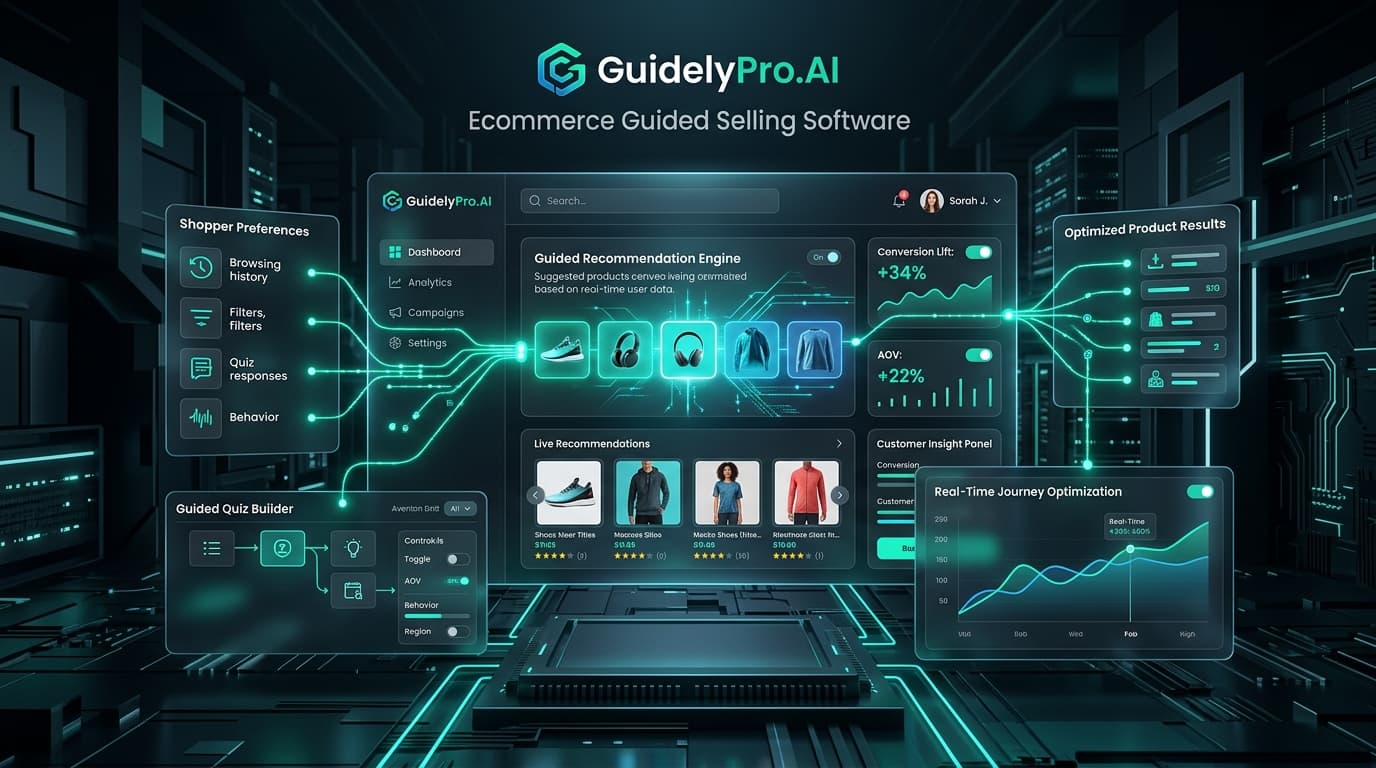
In this comprehensive guide, we present the 9 proven best practices for AI-powered product recommendations. Drawing on real-world data and implementations powered by GuidelyPro.AI, these principles will help you elevate conversion rates, expand average order value (AOV), and build enduring customer loyalty.
---
The 9 Golden Best Practices for AI Recommendations
[1. Ask Don't Guess] ➔ [2. Mobile Ergonomics] ➔ [3. Transparent Why]
         │                       │                      │
[4. Solution Bundles] ➔ [5. Live Stock Sync] ➔ [6. Cleanse Data]
         │                       │                      │
[7. Strategic Placement] ➔ [8. Zero-Party Sync] ➔ [9. Continuous A/B]
---
1. Ask, Don't Guess: Prioritize Explicit Zero-Party Data Over Inferred Tracking
Traditional recommendation engines rely heavily on inferred data: tracking browsing cookies, IP geolocations, and previous page clicks to guess what a customer might want. In a post-cookie digital landscape with strict privacy controls, inferred tracking is increasingly inaccurate. A customer browsing women's floral dresses might be shopping for their sister, purchasing a holiday gift, or simply curious.
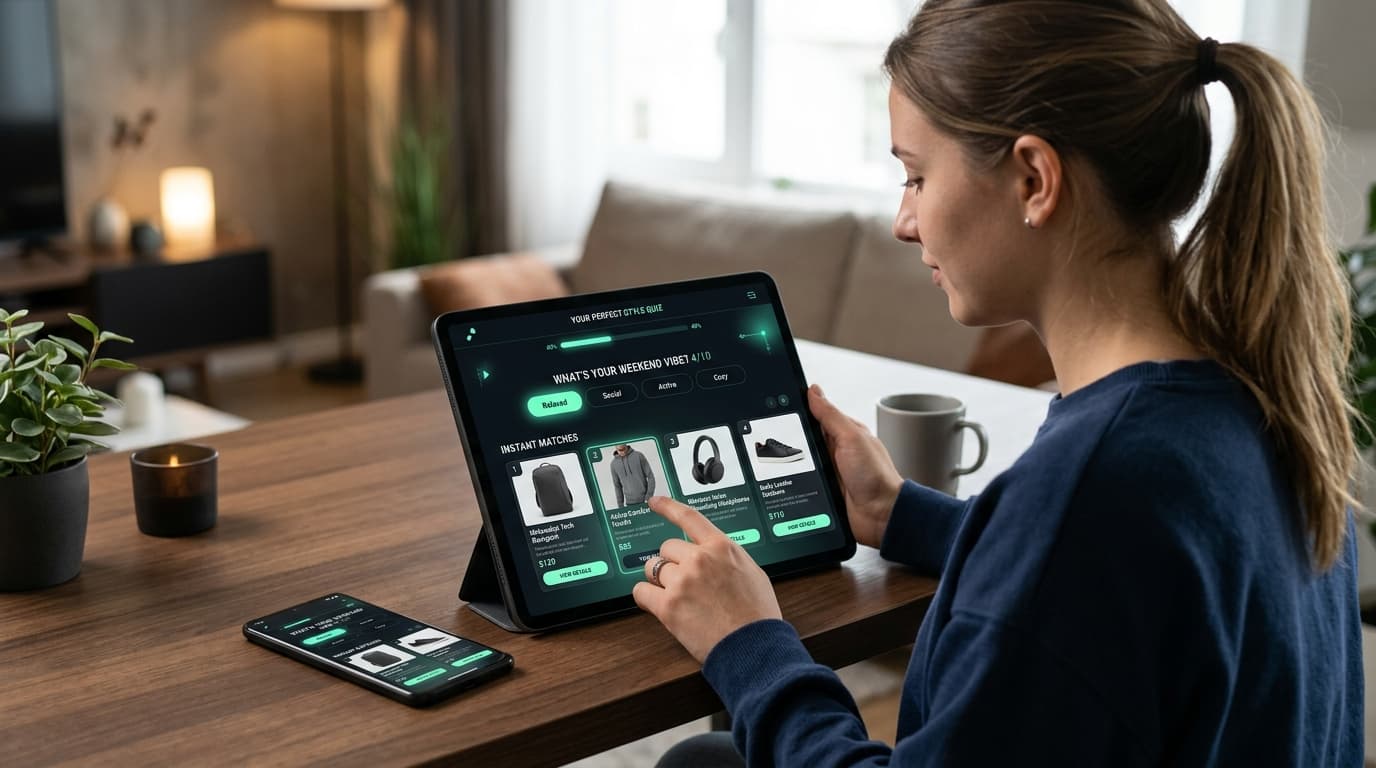
The most effective recommendation strategy is guided discovery: politely asking the shopper what they need through an interactive, consultative product finder.
When shoppers explicitly tell you their skin type, room dimensions, skill level, or dietary goals, your recommendation engine no longer has to guess. It operates on 100% verified zero-party intent. Platforms like GuidelyPro.AI specialize in transforming explicit customer input into high-converting product matches.
---
2. Design for Touch-First Mobile Ergonomics
Over 70% of e-commerce transactions occur on mobile smartphones. Yet many recommendation widgets are architected on desktop screens, resulting in cramped mobile interfaces with microscopic buttons and unreadable product titles.
Mobile UX Guidelines:
---
3. Explain the "Why": Add Social Proof and Contextual Badges
Shoppers do not simply want to be told what to buy—they want to understand why the algorithm selected a particular item. Recommendations presented without context feel like arbitrary advertisements.
Elevate conversion rates by attaching contextual rationale to every recommendation: - "Recommended because you selected: Combination Skin & Anti-Aging" - "Top Match: 98% Compatibility Score with your room dimensions" - "Staff Pick: Preferred by 84% of beginner gravel cyclists"
By explaining the logical connection between the shopper's answers and the recommended product, you build immediate confidence and eliminate skepticism.
---
4. Curate Complete Solutions, Not Just Isolated Products
One of the greatest missed opportunities in digital merchandising is recommending single products in isolation. When a shopper arrives to solve a problem, they rarely need just one item.
Consider the difference in revenue capture:
| Approach | Customer Need: Starting Home Espresso | Products Presented | Cart Value | | :--- | :--- | :--- | :--- | | Isolated Recommendation | "Find a good espresso machine" | Compact Espresso Machine ($299) | $299.00 | | Complete Solution Bundle | "Find a good espresso machine" | Compact Espresso Machine ($299)<br>+ Precision Burr Grinder ($120)<br>+ Stainless Milk Frothing Pitcher ($24)<br>+ Fresh Roast Starter Beans ($18) | $461.00 (+54% AOV Lift) |
Ensure your recommendation engine supports 1-click bundle additions with optional bundle discounts. GuidelyPro.AI allows merchants to configure complete product bundles that shoppers can add to cart with a single click.
---
5. Enforce Real-Time Inventory and Variant-Level Synchronization
Nothing damages customer trust faster than guiding a customer through an engaging discovery experience only to present a product that is sold out in their required size or color.
Inventory Best Practices:
---
6. Cleanse and Standardize Catalog Tag Architecture
The output of an AI recommendation engine is only as good as the input data feeding it. If your product catalog has inconsistent tags—such as some products tagged "eco-friendly", others tagged "sustainable", and others tagged "green"—the algorithm will struggle to match items reliably.
Data Cleansing Checklist:
---
7. Strategically Position Recommendations Across the Customer Journey
Product recommendations should not be confined to a single static widget at the bottom of a product page. High-performing retailers deploy recommendations across multiple high-impact touchpoints:
Homepage Header & Hero Banner: Introduce first-time visitors to an interactive quiz immediately ("Not sure where to start? Take our 60-Second Match Finder"). 2. Category Collection Pages: Embed guided selling finders above faceted product grids to intercept overwhelmed shoppers. 3. Product Detail Pages (PDPs): Display complementary accessories and complete routine bundles right below the primary "Add to Cart" button. 4. Slide-Out Cart Drawer: Present low-friction impulse add-ons (under $25) that complement items currently in the cart. 5. Post-Purchase Thank You Page: Recommend high-affinity follow-up products or subscription upgrades before the session ends.
---
8. Synchronize Zero-Party Intent into Your CRM and Marketing Automation
The rich customer preferences captured during an interactive recommendation quiz are gold for retention marketing. Do not let that data sit trapped inside a siloed tool.
Connect your recommendation engine with marketing suites like Klaviyo, Omnisend, or Mailchimp:
- Tag Customer Profiles: Append quiz tags to the customer's record (e.g., Skin_Type: Sensitive, Budget_Tier: Premium, Primary_Goal: Anti-Aging).
- Trigger Dynamic Post-Quiz Email Flows: If a shopper completes the quiz but abandons their session before checkout, send an automated email containing their exact personalized recommendations.
- Segment Seasonal Campaigns: When launching a new product line, send announcement campaigns exclusively to customers whose quiz profiles indicated interest in that specific category.
---
9. Execute Continuous Multi-Variable A/B Testing
AI recommendation optimization is not a "set-and-forget" project. Consumer preferences, seasonal buying trends, and inventory compositions shift constantly.
Establish a disciplined testing calendar: - Test Question Ordering: Does asking about budget first increase or decrease completion rates? (Usually, asking about goals first and budget last wins). - Test Number of Recommendations: Compare showing 3 curated recommendations versus showing 5 options. (3 options typically produces higher conversion rates by preventing renewed choice overload). - Test CTA Copy: Compare "Add Bundle to Cart" against "Get Complete Routine (Save 10%)".
Merchants utilizing GuidelyPro.AI benefit from intuitive administrative dashboards that allow rapid tweaking and instant redeployment without engineering tickets.
---
Performance Benchmark: Impact of Following the 9 Best Practices
To visualize the commercial impact of applying these best practices, examine this performance comparison from a portfolio of 50 Shopify Plus stores:
| Optimization Level | Quiz Completion Rate | Add-to-Cart Rate | Attributed Conversion Lift | Average Order Value Lift | | :--- | :--- | :--- | :--- | :--- | | Baseline (Default Settings) | 52.4% | 18.2% | +85% | +8.4% | | Optimized (All 9 Best Practices) | 79.6% (+52% Lift) | 38.5% (+111% Lift) | +285% (+235% Lift) | +26.8% (+219% Lift) |
By optimizing UX ergonomics, bundling logic, and CRM integration, merchants more than triple their commercial return.
---
Implementation Playbook: Launching in 4 Agile Sprints
To put these 9 best practices into action without overwhelming your operations team, execute this structured 4-sprint deployment roadmap:
Sprint 1: Catalog Taxonomy Alignment (Week 1)
Sprint 2: Flow Architecture & Prototype Build (Week 2)
Sprint 3: Staging Verification & CRM Pipeline (Week 3)
Sprint 4: Omnichannel Deployment & Live Pilot (Week 4)
---
Related E-Commerce Architecture Guides on AfricaDeep
Expand your merchandising and CRO toolkit with our related articles: - How to Measure Guided Selling Conversions: Complete Analytics Guide - GuidelyPro vs Traditional Product Filters: The Discovery Revolution - How to Choose Product Recommendation Software: 2026 Buyer's Guide - GuidelyPro for Small Businesses: Competing with Retail Giants - Explore GuidelyPro.AI in the AfricaDeep AI Tools Directory
---
Frequently Asked Questions (FAQ)
What makes zero-party data better than third-party tracking for recommendations?
How many product recommendations should be displayed at the end of a quiz?
What is the best way to recommend product bundles?
Does an AI recommendation engine slow down Shopify or WooCommerce stores?
How can I prevent the engine from recommending out-of-stock items?
Can I collect email and SMS leads with AI recommendations?
How often should I update or refine my recommendation flows?
Which e-commerce platforms support GuidelyPro.AI?
---
Conclusion: Transform Shopper Discovery with Intelligent Guidance
In 2026, superior product discovery is the ultimate competitive moat in digital retail. By moving away from generic algorithmic guesses and implementing structured, consultative guided selling grounded in these 9 best practices, you create an online shopping experience that customers love and competitors cannot match.
Ready to implement world-class AI product recommendations on your store? Get started with GuidelyPro.AI today and experience the future of personalized e-commerce discovery.