How to Choose Product Recommendation Software in 2026: The Ultimate E-Commerce Buyer's Guide
The definitive 2026 buyer's guide for choosing product recommendation software. Compare pricing models, AI algorithms, integration speed, and ROI.
Technology writer, e-commerce strategist, and enterprise software reviewer at AfricaDeep.
Published: 10 October 2026
Updated: 10 October 2026
How to Choose Product Recommendation Software in 2026: The Ultimate E-Commerce Buyer's Guide
Affiliate Disclosure: This definitive market buyer's guide contains official affiliate links. If you select or subscribe to software platforms through the partner links in this guide—including our top recommendation [GuidelyPro.AI](https://guidelypro.pxf.io/OYJmQz)—AfricaDeep.com may earn a referral commission at no additional cost to you. Our vendor assessments, comparative scorecards, and architectural analyses are conducted with complete editorial objectivity.
---
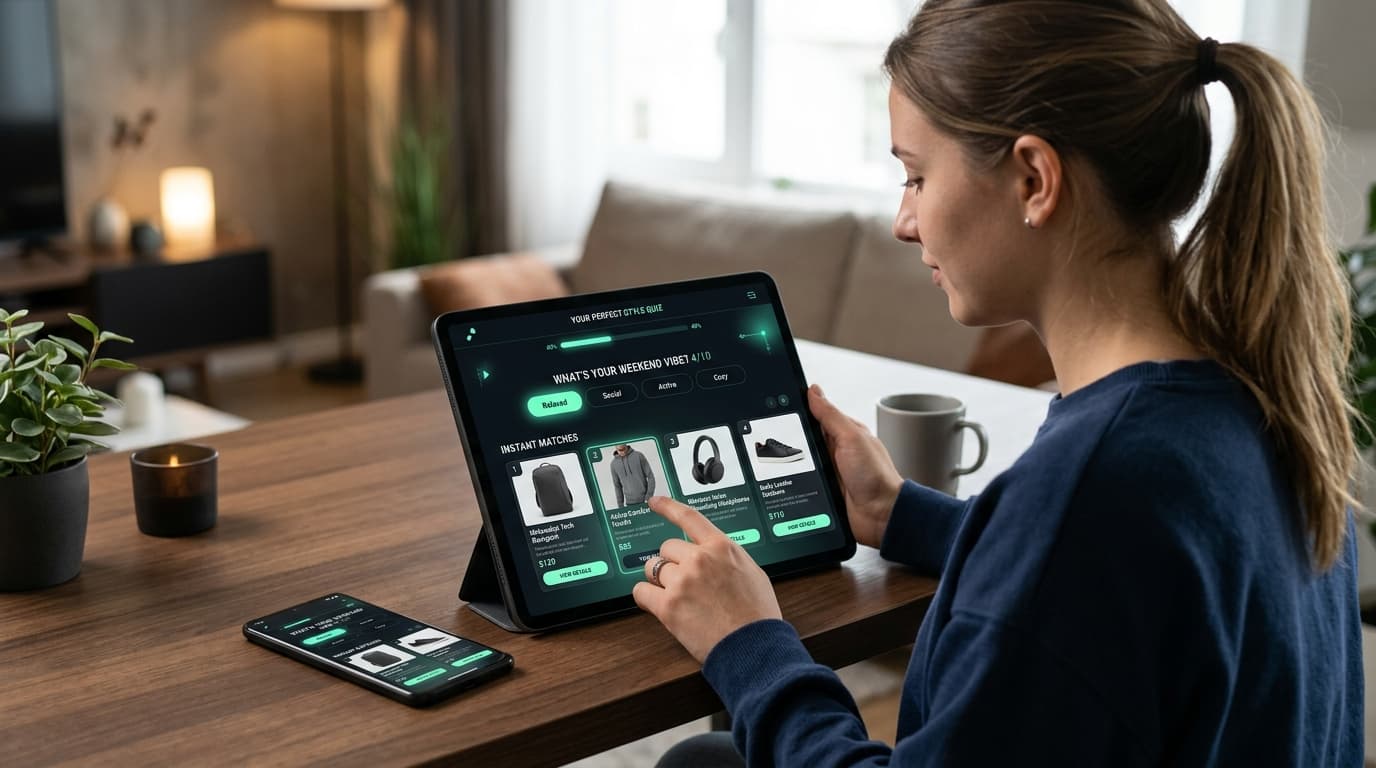
In the modern digital retail landscape, e-commerce storefronts live and die by their ability to connect visitors with the exact products that solve their problems. As digital acquisition costs climb and consumer attention spans compress, traditional navigational menus and static collection filters are no longer sufficient. Online merchants of all sizes are turning to product recommendation software and interactive guided selling platforms to drive conversion velocity, expand average order value (AOV), and reduce customer return rates.
However, navigating the crowded marketplace of recommendation software vendors in 2026 is a daunting task.
The market spans everything from lightweight free WordPress plugins to seven-figure enterprise personalization suites with mandatory annual contracts and invasive gross-revenue taxes. Choosing the wrong software can saddle your store with bloated page weights, frustrating vendor lock-in, and unpredictable software invoices. Choosing the right platform can permanently accelerate your conversion rates and deliver a 30x return on investment.
In this definitive 2026 buyer's guide, we provide a complete, unbiased evaluation roadmap. We analyze the four primary architectural categories of recommendation software, dissect predatory pricing traps to avoid, establish a 7-step vendor selection process, and reveal why modern guided selling engines like GuidelyPro.AI represent the smartest investment for scaling digital retailers.
---
The 4 Categories of Product Recommendation Software
Before evaluating specific vendor features, you must understand the four distinct architectural categories available in the e-commerce market:
Category 1: Enterprise Predictive Suites (Dynamic Yield, Nosto, Bloomreach)
Category 2: Basic Static Form & Survey Plugins (Typeform, WPForms, SurveyMonkey)
Category 3: Conversational AI Chatbots (GPT-4 Shopping Assistants)
Category 4: Dedicated Guided Selling & Interactive AI Finders (GuidelyPro.AI)
1. Enterprise Predictive Suites (e.g., Bloomreach, Dynamic Yield, Nosto)
2. General-Purpose Form and Survey Plugins (e.g., Typeform, SurveyMonkey, Formspree)
3. Unstructured Conversational AI Chatbots
4. Dedicated Guided Selling & Interactive AI Finders (e.g., GuidelyPro.AI)
---
5 Critical Software Traps to Avoid When Choosing a Vendor
When evaluating vendor sales demos and pricing pages, beware of five common commercial and technical pitfalls:
Trap 1: The "Gross Merchandise Value (GMV)" Revenue Tax
Trap 2: Heavy Script Bloat and SEO Degradation
Trap 3: Asynchronous Inventory Lag (Out-of-Stock Disasters)
Trap 4: Black-Box Recommendations Without Merchandising Controls
Trap 5: High Engineering Dependency and Custom Code Requirements
---
The 7-Step Buyer's Selection Framework
To select the ideal software platform for your organization, follow this systematic 7-step evaluation process:
Step 1: Define Goals ➔ Step 2: Audit Catalog ➔ Step 3: Establish Budget
         │                       │                      │
Step 4: Shortlist Vendors ➔ Step 5: Test Staging ➔ Step 6: 14-Day Pilot ➔ Step 7: Final Selection
Step 1: Define Your Primary Business Objectives
Step 2: Audit Catalog Scale and Complexity
Step 3: Establish Total Cost of Ownership (TCO) Limits
Step 4: Shortlist 2 to 3 Contenders
Step 5: Conduct a Sandbox Staging Test
Step 6: Execute a 14-Day Live Traffic Pilot
Step 7: Finalize Vendor Contract and Scale Rollout
---
Comprehensive Feature Comparison: How Leading Solutions Stack Up
To provide total clarity, review this side-by-side comparison of the leading approaches to e-commerce product recommendations in 2026:
| Evaluation Dimension | GuidelyPro.AI | Enterprise AI Personalization | Generic Form Builders | AI Chatbot Widgets | | :--- | :--- | :--- | :--- | :--- | | Primary Strength | High-velocity guided selling & bundling | Omnichannel predictive page tailoring | General non-transactional surveys | Customer support FAQ answers | | Setup Time | Under 45 minutes | 4 to 12 weeks | 1 to 2 hours | 2 to 5 hours | | Code Required | 0% (Pure no-code visual builder) | Extensive custom code & API mapping | Minimal | Moderate (Prompt tuning) | | Mobile UX Rating | 9.8 / 10 (Touch-first cards) | 7.5 / 10 (Heavy widgets) | 6.5 / 10 (Form-heavy) | 4.5 / 10 (Typing required) | | Catalog Syncing | Live real-time webhooks | Batch ETL pipelines or API | Manual CSV upload | Periodic vector database sync | | 1-Click Bundling | Supported natively | Rule-based matrix add-ons | Not supported | Not supported | | Core Web Vitals Impact | Negligible (<45 KB script) | Significant (>250 KB) | Low to moderate | Moderate | | Pricing Transparency | Flat monthly SaaS (Zero GMV tax) | Opaque GMV commission + base fee | Cheap tiers, limited commerce | Per-token / per-seat fees | | Attributed ROI Multiple | 25x to 50x net software ROI | 3x to 8x (Eroded by high fees) | Marginal | Low to neutral |
---
Technical Integration Architecture: How Modern SaaS Bridges Platforms
When you invest in software like GuidelyPro.AI, understanding the technical underpinnings provides confidence that your infrastructure remains secure, maintainable, and resilient:
Theme App Extension Architecture: On Shopify, modern recommendation tools deploy as Theme App Blocks under Online Store 2.0. This means zero manual injection into theme.liquid. If you change themes, the app embeds smoothly without leaving legacy code behind.
2. Asynchronous Edge CDN Delivery: Scripts are distributed across Tier-1 CDN edge nodes. When a mobile shopper loads your page, the lightweight bundle loads in parallel with theme assets, ensuring first-input delay (FID) and interaction to next paint (INP) meet Google's strict 2026 thresholds.
3. Cart Webhook & Direct AJAX Injection: When a customer taps "Add Recommended Bundle to Cart", the tool dispatches an asynchronous AJAX cart request directly to your store's native checkout pipeline, applying coupon incentives and variant selections seamlessly.
4. Secure Data Isolation: Customer responses and personal preferences are stored in encrypted, GDPR/CCPA-compliant databases, protecting customer trust and complying with global data privacy mandates.
---
Deepen Your Guided Commerce Strategy on AfricaDeep
Explore our companion guides across the AfricaDeep e-commerce library: - GuidelyPro.AI Complete Review: Features, Pricing & Capabilities - How to Evaluate an AI Product Finder: 10-Point Scorecard - How to Measure Guided Selling Conversions & ROI - AI-Powered Product Recommendations: 9 Proven Best Practices - GuidelyPro vs Traditional Product Filters: The Discovery Revolution - Visit GuidelyPro.AI in our AI Tools Directory
---
Frequently Asked Questions (FAQ)
What is the average cost of product recommendation software for small to mid-sized stores?
What is the single most important feature to look for in recommendation software?
How quickly can we launch an interactive product finder?
Can recommendation software increase Average Order Value (AOV)?
How does product recommendation software capture customer leads?
What is the difference between collaborative filtering and guided selling?
Does product recommendation software work on mobile devices?
How do I know if the software is actually generating profit?
---
Final Recommendation: The Best Choice for 2026
Choosing the right product recommendation software is one of the highest-leverage commercial decisions an online retailer can make.
While enterprise conglomerates with massive engineering budgets may choose to navigate the complexity of multi-million dollar personalization suites, the vast majority of direct-to-consumer brands, growing Shopify merchants, and WooCommerce stores need a platform that is fast, visually stunning, easy to manage, and commercially fair.
For its unmatched blend of touch-first visual guided discovery, instant no-code deployment, real-time inventory synchronization, and transparent flat-rate pricing, GuidelyPro.AI stands out as our top-rated product recommendation software in 2026.
Take the first step toward transforming your store's conversion rate: Start using GuidelyPro.AI today and discover how guided selling can accelerate your e-commerce growth.